
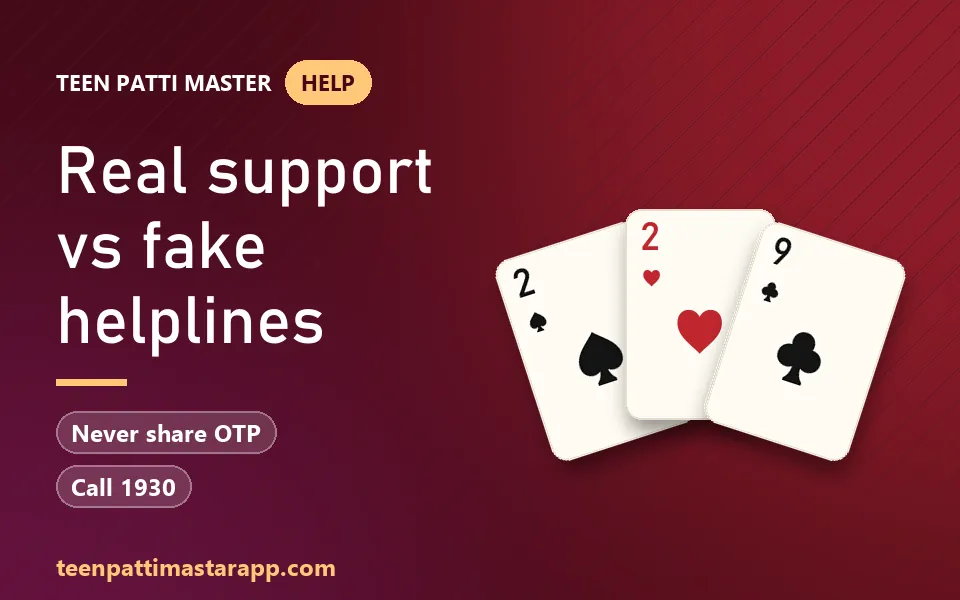
Key takeaways
- Use the in-app Help option or the developer email on the store listing.
- Real support never asks for an OTP, UPI PIN or screen share.
- A fee to release a withdrawal is always a scam.
- Shared an OTP or paid? Call 1930 straight away.
Why the "Customer Care Number" You Found May Be Fake
Search for a Teen Patti Master customer care number and you'll see plenty of them: in YouTube comments, on blog pages, on Google Maps pins, in Facebook posts. Most are posted by scammers. They know that people who search for support usually have a problem with money, and they're ready with a script.
The pattern is nearly always the same. You call, a polite "agent" listens to your problem, and then asks you to share your screen, install a "support app", or pay a small fee to release your balance. That's when the real loss happens.
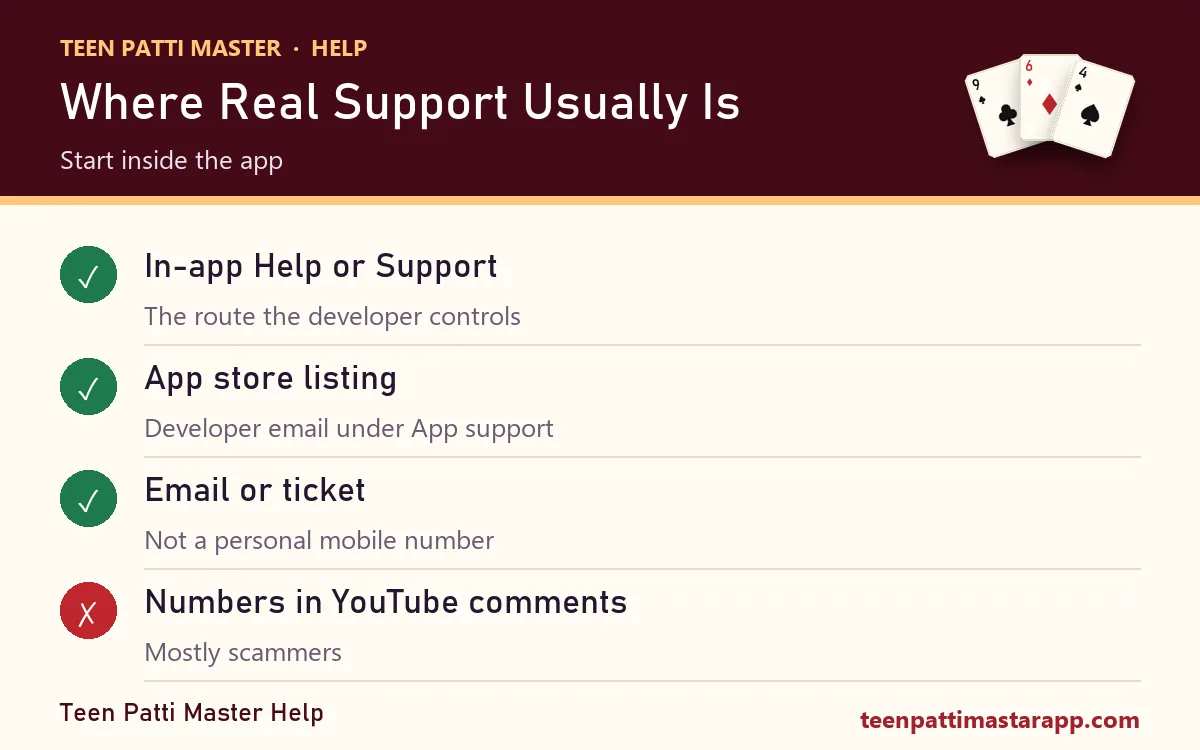
Where Genuine Help Usually Lives
- Inside the app itself. Look for a Help, Support, Feedback or "Contact us" option in the menu or settings. That's the route a real developer controls.
- The app store listing. The developer's email and website are listed under "App support" on Google Play. If the email on a random page doesn't match, ignore that page.
- Email, not phone. Most app makers handle support by email or in-app ticket. A personal mobile number or WhatsApp-only support is a warning sign.
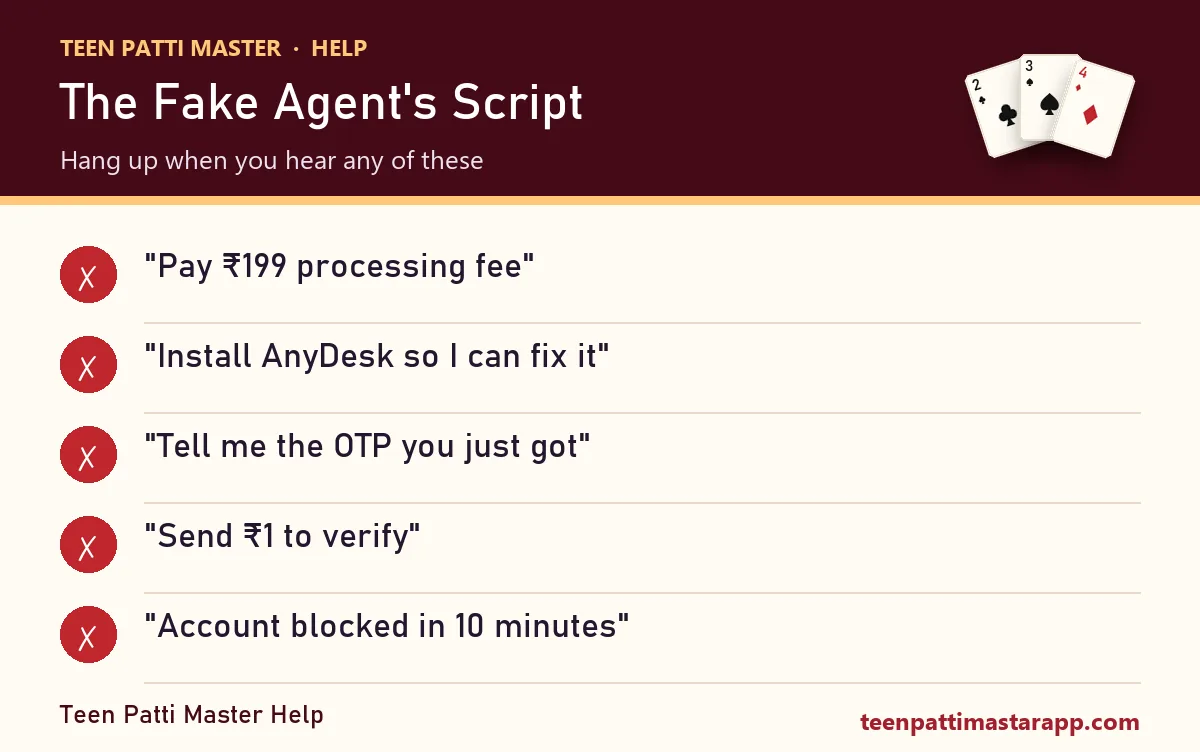
The Scam Script, Line by Line
| What the "agent" says | What it means |
|---|---|
| "Your withdrawal is stuck, pay ₹199 processing fee" | No genuine service charges you to receive your own money. |
| "Install AnyDesk so I can fix it" | Screen sharing lets them watch your OTPs and banking apps. |
| "Tell me the OTP you just received" | That OTP approves a payment or login. Never share it. |
| "Send ₹1 to this UPI ID to verify" | Often a collect request for a much larger amount. |
| "Your account will be blocked in 10 minutes" | Pressure so you don't stop and think. |
Login and Account Problems
Most Teen Patti apps let you play as a guest or log in with a mobile number and OTP. A few things to keep in mind:
- The OTP is for you to type into the app. Nobody, including "support", needs it.
- Guest accounts are often tied to the phone. Uninstalling the app or clearing its data can erase a guest account, so link a number first if you care about your progress.
- Forgot which number you used? The in-app help is the only place that can check. A stranger online can't.
"Withdrawal Problem" and "Money Not Received"
This is the most common reason people look for a helpline. Since the Online Gaming Act, 2025, apps that take deposits and pay out cash for Teen Patti are banned in India, and banks are told not to process their payments. So if an app is holding your money:
- There's no regulator or ombudsman who can order it to pay.
- Any "fee to unlock withdrawal" is a second loss, never a solution.
- The right move is a complaint at 1930 or cybercrime.gov.in, with the UPI IDs and transaction IDs you paid to.
Already Shared an OTP or Paid Someone?
Call 1930 now
The first few hours matter most. Banks can sometimes freeze money that hasn't moved on yet.
Uninstall any screen-sharing app
AnyDesk, TeamViewer, QuickSupport or anything the caller asked you to install.
Call your bank's official number
Use the number on your card or the bank's own website. Block the card or UPI and change your PIN.
Report the caller's number
Use Chakshu on Sanchar Saathi so the number can be blocked for others.
For the full checklist on spotting fake apps before any of this happens, read our Teen Patti Master app safety guide. In Hindi: नकली ऐप से कैसे बचें.
Frequently Asked Questions
I found a Teen Patti Master helpline number online. Can I trust it?
We can't confirm any phone number, and most numbers posted online are scams. Use the Help or Support option inside the app, or the developer email shown on the official app store listing.
Customer care asked for my OTP. Is that normal?
No. A real support team never needs your OTP, UPI PIN or a screen share. Hang up and, if you've already shared it, call 1930.
My withdrawal is pending and they want a fee. Should I pay?
No. Paying to release your own money is a common scam. Report it at cybercrime.gov.in or call 1930.