
Key takeaways
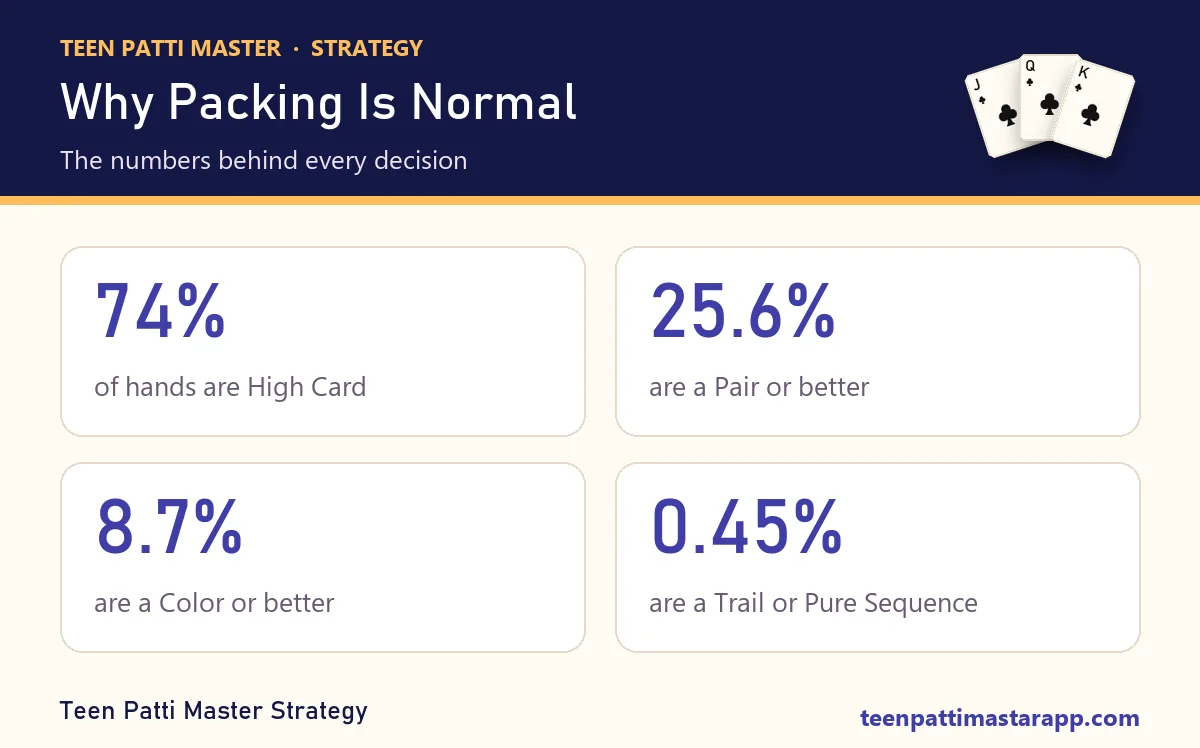
- 74% of hands are High Card, so packing is normal.
- Stay blind early; look once the stake gets expensive.
- Use side shows with medium hands, not your monsters.
- No trick or app can predict the cards.
Start With the Numbers
Good decisions in Teen Patti Master, or at any home table, start from one fact: most hands are bad. Out of 22,100 possible hands, 16,440 (74%) are just High Card. Only about one hand in four is a Pair or better, and only about one in twelve is a Color or better.
| Your hand | Beats roughly | Rough guide |
|---|---|---|
| Trail, Pure Sequence | 99.5%+ | Raise; you'll rarely lose |
| Sequence | 96–99.5% | Strong; keep betting |
| Color | 91–96% | Good; bet with confidence early |
| Pair | 74–91% | Playable; careful when stakes jump |
| High Card, Ace high | 57–74% | Marginal; pack against heavy betting |
| High Card, below Ace | under 57% | Usually pack once seen |
Use the Hand Checker to see the exact figure for any hand.
When Staying Blind Makes Sense
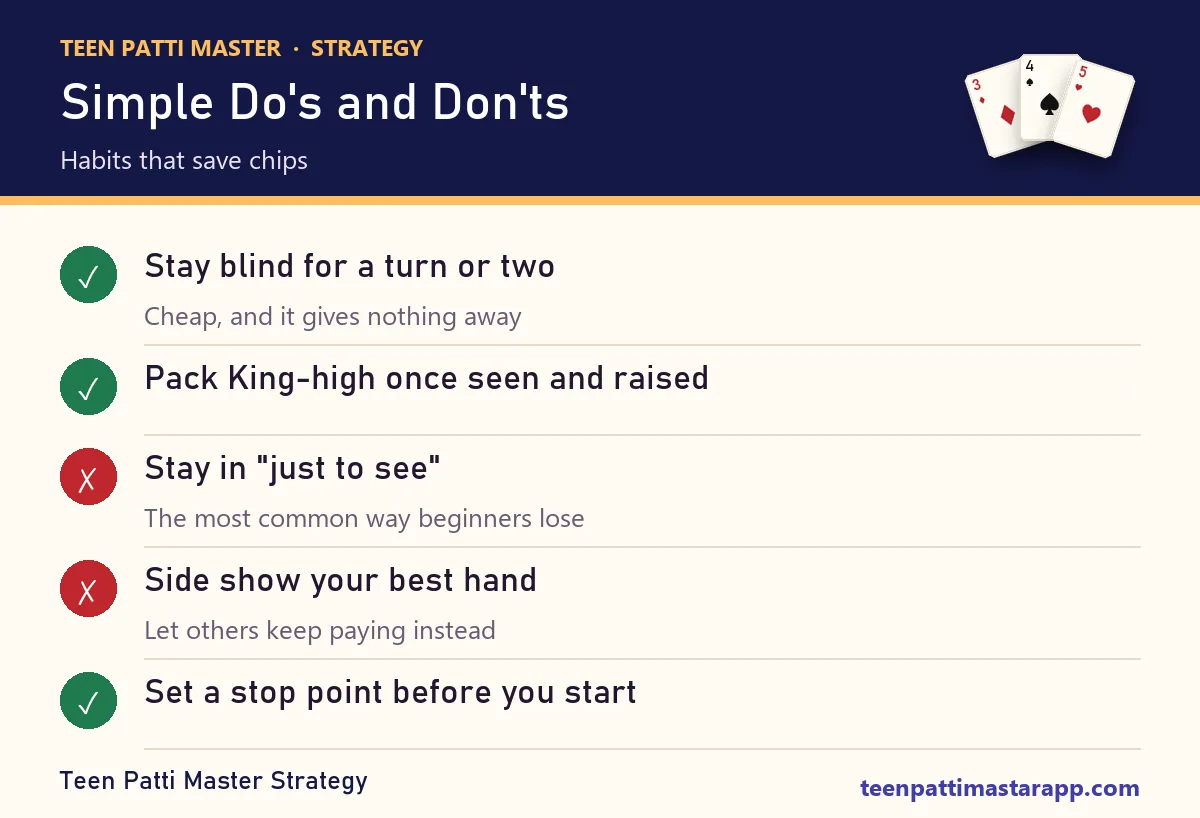
Blind bets cost half as much, and they reveal nothing. Staying blind for the first one or two turns is a sound default, especially at a full table where several players will pack anyway. The trade-off: you're betting without information. Once the stake climbs, or a seen player raises hard, it's time to look.
A useful rule of thumb: look when the cost of one more blind bet is more than you'd be happy to lose with a bad hand.
Packing Is a Skill, Not a Defeat
Beginners lose most of their points by staying in with weak hands "just to see". Each extra bet with a below-average hand is a small expected loss, and those add up. Packing a weak seen hand early keeps your stack for the rounds where you actually hold something.
- Pack low High Card hands (King or lower) once you're seen and anyone raises.
- With an Ace-high hand, it often depends on the table: fine against one cautious opponent, risky against three aggressive ones.
- Don't throw good points after bad. What's already in the pot is gone either way.
Using the Side Show Well
The side show is your way to remove one rival without opening your cards to the whole table. It's at its best with a middling hand, say a Pair or a low Color, against a player before you who you suspect is pushing a weaker one. Remember that even a won side show tells your opponent something about your strength. With a very strong hand, it's often better not to side show and let others keep paying into the pot.
When you're asked, refusing is allowed. Refuse if your hand is middling and you'd rather let betting continue.
Reading the Table
- Sudden raises from a seen player usually mean a real hand. Beginners rarely bluff big.
- A player who stays blind for a long time might be bluffing, or just patient. Blind players don't know their own cards either.
- In apps, you can't see faces, but you can see timing. Instant calls often mean a pre-decided strong hand; long pauses suggest doubt.
Myths to Ignore
- "You're due a good hand." Every deal is independent. Losing ten rounds in a row doesn't make the eleventh any luckier.
- "There's a trick or hack to win." No pattern or "tricks app" can predict shuffled cards. Anyone selling one is running a scam. See which Teen Patti Master tricks actually help, and which are scams.
- "Always play blind." Blind play is a tool, not a system. At high stakes, information matters more than saving half a bet.
Your Most Important Strategy: Limits
Decide how long you'll play, and with how many points, before you start, and stop when you reach either limit. That one habit matters more than any betting tactic. Read our responsible gaming guide for more.
Frequently Asked Questions
Does skill really matter in Teen Patti Master if the cards are random?
Over one hand, luck rules. Over a few hundred, the player who packs bad hands early and bets good ones harder comes out ahead.
What percentage of hands are a Pair or better?
About 25.6%, or roughly one hand in four.
Is there a trick to always win at Teen Patti?
No. Shuffled cards can't be predicted. Apps or "tricks" that claim otherwise are scams.